
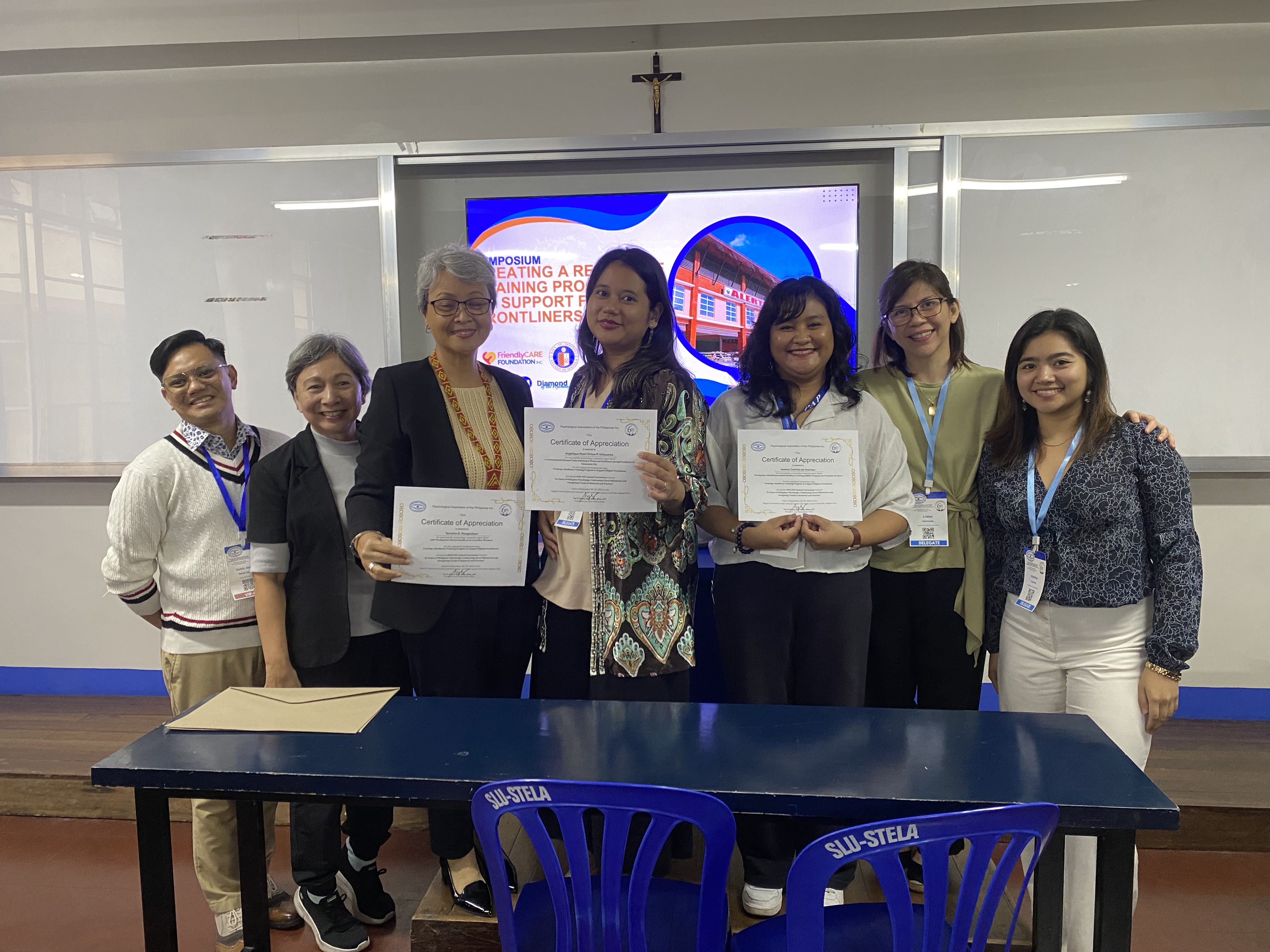
Members of the MBRT Project Team from FriendlyCare and Ateneo de Manila University - Department of Psychology attended the 60th Annual Convention of the Psychological Association of the Philippines from September 26-28, 2024 in Baguio City, Philippines to present the progress of the project through an organized symposium titled “Creating a Resilience Training Program to Support Filipino Frontliners.” This symposium provided an opportunity to share insights and findings with the scientific community, including psychologists, researchers, and other mental health professionals. Three papers were presented in the symposium that offer a picture of how the project is developing. The first presentation, Safe Workspaces: Mental Health of our Frontline Workers, was presented by the Overall Project Head, Ms. Teresita Panganiban of FriendlyCare Foundation Inc. This session outlined the critical role of frontline workers’ mental health in the broader framework of community resilience and disaster management. Emphasizing the urgent need for psychosocial support, this presentation discussed how a participatory and culturally sensitive approach to intervention development aligns with global findings on the high return on investment of mental health programs.
Through this presentation, the team highlighted the value of co-creation with stakeholders to build a sustainable and contextually relevant intervention model. The second presentation, A Contextual and Situated Understanding of Stress and Resilience among Frontliners in Valenzuela City, was presented by Ms. Angelique Pearl Virtue Villasanta, the Phase 1 Team Lead. In this session, the qualitative findings were presented, which explored stress and resilience among six frontline units in Valenzuela. Drawing from Bronfenbrenner’s ecological systems theory, the study examined the relational, operational, and organizational domains of stress, situating frontliners’ experiences within specific cultural contexts. Data analysis revealed unique idioms and narratives surrounding stress and resilience, reflecting both the sources of distress and resources for resilience across different types of frontline work. This presentation enriched the research team’s understanding of how local contexts shape frontliners’ self-conceptions and approaches to resilience, offering essential insights for the culturally informed design of the minfulness-based intervention. The final presentation, Developing a Mindfulness-Based Resilience Training (MBRT) Program for Frontline Workers, was presented by Ms. Jessica Camille De Guzman, the Project Manager for Ateneo Research Team. In this session, the approach to intervention design was outlined, grounded in a comprehensive theory of change and informed by both top-down and bottom-up methodologies.
This resilience training integrates principles from mindfulness, trauma-informed care, positive psychology, and stress reduction, structuring the program with mindfulness-based intervention (MBI) mechanisms at its core. This presentation emphasized the importance of blending scientific evidence with local realities, ensuring that the program not only resonates with frontliners’ lived experiences but also aligns with best practices in resilience and mental health training. Through this symposium, the team effectively communicated the foundational work of Phase 1, particularly in understanding the frontline context and laying the groundwork for a responsive, inclusive, and sustainable resilience training program. This initial phase has set the stage for subsequent intervention development phases and broader implementation across frontline sectors in the City of Valenzuela.