
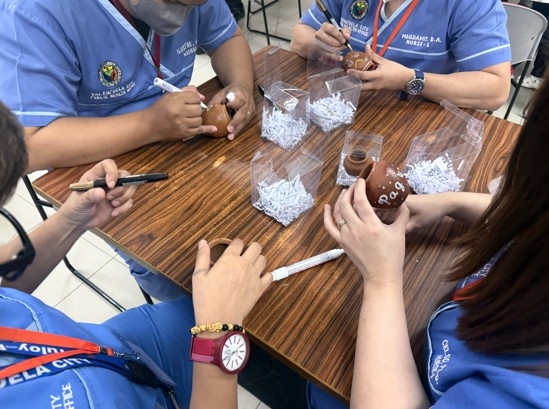
In collaboration with the local government of Valenzuela City, FriendlyCare Foundation, Inc., together with the Centre for Mindfulness Studies in Toronto, Canada, and psychologists from the Ateneo de Manila University, developed and tested a mindfulness-based intervention to promote the resilience and well-being of the city’s frontline workers. With the help of DOST-PCHRD as the funding agency, the project officially started last October 2023. The goal of the project is to discover whether a psychological resilience training program can reduce the incidence of emotional exhaustion and burnout among disaster frontline workers, which can cause most significant mental health problems such as anxiety and mood disorders. Resilience training increases people’s ability to bounce back from adversity, reducing the likelihood that they will subsequently suffer from such disorders. The focus is on a workforce sector for whom resilience is critical: front-line responders to disasters and community violence, where constant stress exposure leads to elevated levels of all static overload, emotional exhaustion, and burnout. The project targets 6 specified cohorts of frontline workers namely disaster responders, police, fire fighters, early child care and development workers, health care workers, and social welfare workers. A training program that increases the resilience of this high-risk group might have broad applicability, suitably modified, as a preventive approach to dealing with the overall mental health burden in the general population, caused mostly by depression and anxiety disorders strongly associated with stress exposure. The project went through three phases such as Program Design, Pilot Study and Refinement, and Randomized Controlled Trial. The objective of Phase I is to design a resilience intervention program, founded on mindfulness components, that is culturally and contextually acceptable, feasible, and relevant to frontline service providers in Valenzuela City. To achieve this, researchers from Ateneo Psychology Department conducted an ethnographic research study to understand the core components needed in the mindfulness-based resilience training through the context of the community’s needs, challenges, particular circumstances of the target program recipients, mindful of the local features and realities that have implications for the acceptability, feasibility, and relevance of the program. The next phase is a pilot test with the 6 groups of frontline workers with a pre-post mixed methods design. The objective is to investigate the cultural acceptability and feasibility of the program in the community context, explore preliminary effects on outcomes, and examine the psychometric properties of the planned measures. Lastly, the gold standard for quantitative reliable evidence on the effectiveness of an intervention is used to test the effectiveness of the program. Through a randomized controlled trial, subjects from the 6 cohorts were exposed to the program while the other was on the waitlist. Randomized controlled trial results show that the participants showed greater resilience under stress, higher job satisfaction, and stronger emotional regulation compared to those who had not yet joined the program. They also reported greater self-compassion, more consistent use of mindfulness practices, and lower levels of stress and burnout. Beyond the numbers, frontline workers themselves described meaningful personal changes, including heightened awareness and attentiveness to their stresses, emotions, and well-being; more intentional responding to challenges; and stronger connections with colleagues and family. While some were hesitant to participate at first, many grew more engaged as they experienced the program's relevance and support firsthand. This initial, rigorous evidence supports that MBRT is a safe, effective program that strengthens the well-being and performance of the frontline workers who serve our communities.